

Top Cheque Bounce Lawyer in Delhi – Section 138 NI Act Expert
What is Cheque Bounce?
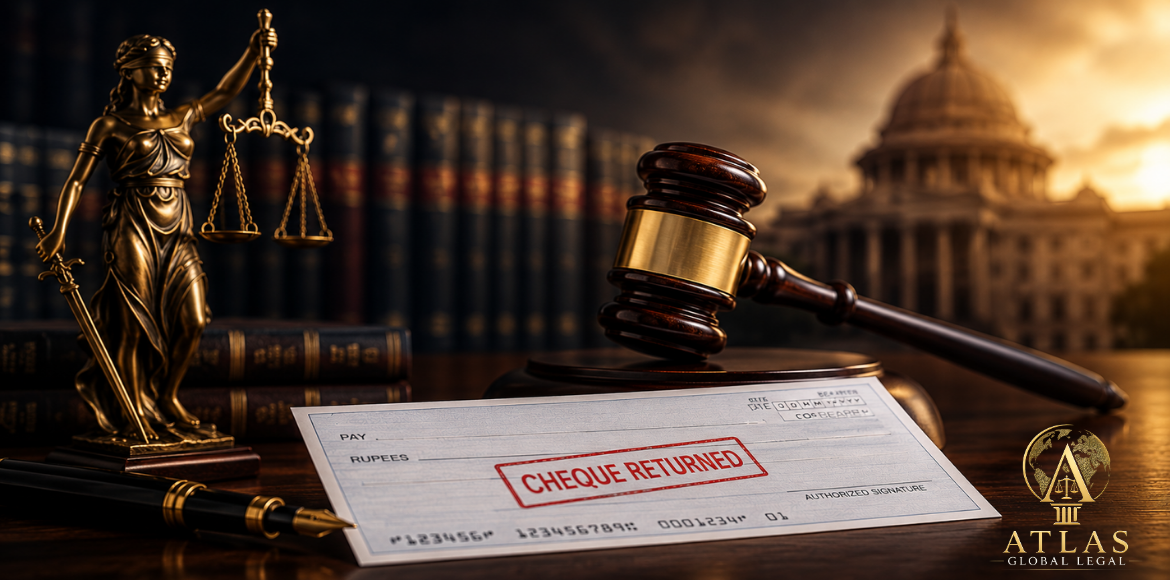
A cheque bounce happens when your bank refuses to pay the amount written on a cheque. This is also called “cheque dishonor”. The bank sends the cheque back with a memo stating the reason. In India, a bounced cheque isn’t just a banking issue. Under the Negotiable Instruments Act, 1881, specifically Section 138, willful dishonor of a cheque is treated as a criminal offense. The person who issued the cheque can face jail, fine, or both.
When Does Section 138 Apply? 5 Legal Conditions
For a court to accept a Section 138 case, all 5 conditions must be met:
-
- The cheque must be given to repay a loan, business payment, or any legal liability. If it was given only as a security/guarantee cheque, Section 138 won’t apply.
- Presented within 3 months: The cheque has to be deposited in the bank within 90 days from the date written on it. After 3 months, it becomes “stale” and the case gets dismissed.
- Dishonored due to valid reasons: The bank return memo must state reasons like “Insufficient Funds” or “Exceeds Arrangement”. Technical errors like signature mismatch fall under different rules.
- Legal notice sent within 30 days: After the cheque bounces, the payee must send a legal demand notice to the drawer via registered post/courier within 30 days. The notice must demand payment within 15 days.
- No payment made in 15 days: If the drawer fails to pay the cheque amount within 15 days of receiving the notice, only then can a criminal complaint be filed.Miss even 1 condition, and the Section 138 case becomes weak.
Punishment for Cheque Bounce Under Section 138
If the court finds the drawer guilty, the punishment can be:
-
-
- Imprisonment: Up to 2 years in jail
- Fine: Up to twice the cheque amount
- Both: Jail + fine together In 2026, most cases get settled out of court. Judges focus on recovering the money with interest rather than sending people to jail.
-
Legal Remedies for the Payee – 3 Options
- File a Criminal Complaint If no payment comes after 15 days of notice, file a complaint in the Metropolitan/Magistrate Court within 1 month. This is the fastest route. The court issues summons and 70% of drawers settle immediately.
- File a Civil Suit for Recovery Under Order 37 of the Civil Procedure Code, you can file a “Summary Suit” to recover the cheque amount + interest + damages. No jail here, only money recovery. Companies prefer this route.
- Initiate Insolvency Proceedings If the person/company is in the habit of issuing bounced cheques, you can file insolvency under the IBC, 2016. For companies, this can lead to liquidation.
Defenses Available to the Drawer
- Not every bounced cheque leads to conviction. The drawer can defend by proving.
- Security Cheque: The cheque was only a guarantee, not for repayment of debt.
- Stolen/Forged Cheque: Someone misused the cheque without permission.
- Material Alteration: The payee changed the amount/date without consent
Debt Already Paid: The loan was settled before the cheque was presented
Recent Amendments & Supreme Court Rulings 2026
- Interim Compensation 20%: After the NI Amendment Act, 2018, courts can order the drawer to pay up to 20% of the cheque amount as interim compensation during trial. This helps the payee recover money faster.
- Fast-Track Trials: The Supreme Court has repeatedly directed lower courts to dispose of Section 138 cases within 6 months to avoid delays.
Conclusion: Key Takeaways
A cheque bounce is serious. It carries both criminal and civil liability in India. For Cheque Drawers: Always check your bank balance before issuing a cheque. If you get a legal notice, don’t ignore it. Reply through a lawyer within 15 days.For Cheque Holders: Deposit the cheque within 90 days and send the legal notice within 30 days. Delay kills your case.Facing a Section 138 case? The law is technical. One mistake in notice or timeline and the whole case collapses. Consulting an experienced cheque bounce lawyer in Delhi is the safest step.